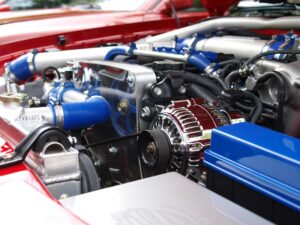
The engine is the heart of your car. It converts fuel into power, enabling the car to move. Keeping the engine in good condition with regular oil changes, tune-ups, and timely servicing ensures smooth and reliable performance.
2. Battery
Your car won’t even start without the battery. It provides the electrical power needed to start the engine and run features like lights, radio, and AC. A weak or dead battery can leave you stranded, so check its health regularly.
3. Alternator
The alternator charges the battery while the engine is running. If your lights start dimming or electronics fail, it’s often due to a faulty alternator. This part keeps your car powered during long drives
4. Spark Plugs
Small but powerful, spark plugs ignite the fuel-air mixture in your engine. Worn-out spark plugs can cause engine misfires, poor fuel economy, and difficulty starting the car. Replacing them at the right intervals is crucial.
5. Radiator
The radiator prevents your engine from overheating by circulating coolant. Overheating can cause severe engine damage, so always keep an eye on coolant levels and ensure the radiator is functioning properly.
6. Fuel Pump
The fuel pump delivers gasoline from the tank to the engine. If it fails, your car won’t run. Signs of a weak fuel pump include sputtering, difficulty accelerating, or the car stalling.
7. Timing Belt / Chain
The timing belt (or chain) synchronizes the movement of the engine’s valves and pistons. If it breaks, the engine could suffer catastrophic damage. Manufacturers usually recommend replacing it after a set mileage.
8. Air Filter
The air filter ensures clean air enters the engine for combustion. A dirty air filter reduces efficiency, power, and fuel economy. Checking and replacing it regularly helps your engine breathe better.
9. Transmission
The transmission transfers power from the engine to the wheels. Automatic or manual, this part ensures smooth gear shifts. Transmission problems can be expensive, so regular maintenance is key.
10. Exhaust System
The exhaust system directs harmful gases away from the engine and reduces emissions. A damaged exhaust can affect performance, fuel efficiency, and even pose safety risks due to carbon monoxide leaks.
Final Thoughts
Understanding these 10 crucial car motor parts gives you more confidence as a driver. Even if you don’t repair them yourself, being aware of how they work can help you spot issues early and communicate better with mechanics.
👉 Tip for drivers: Regular servicing, routine checks, and preventive maintenance can save you from unexpected breakdowns and costly repairs.